
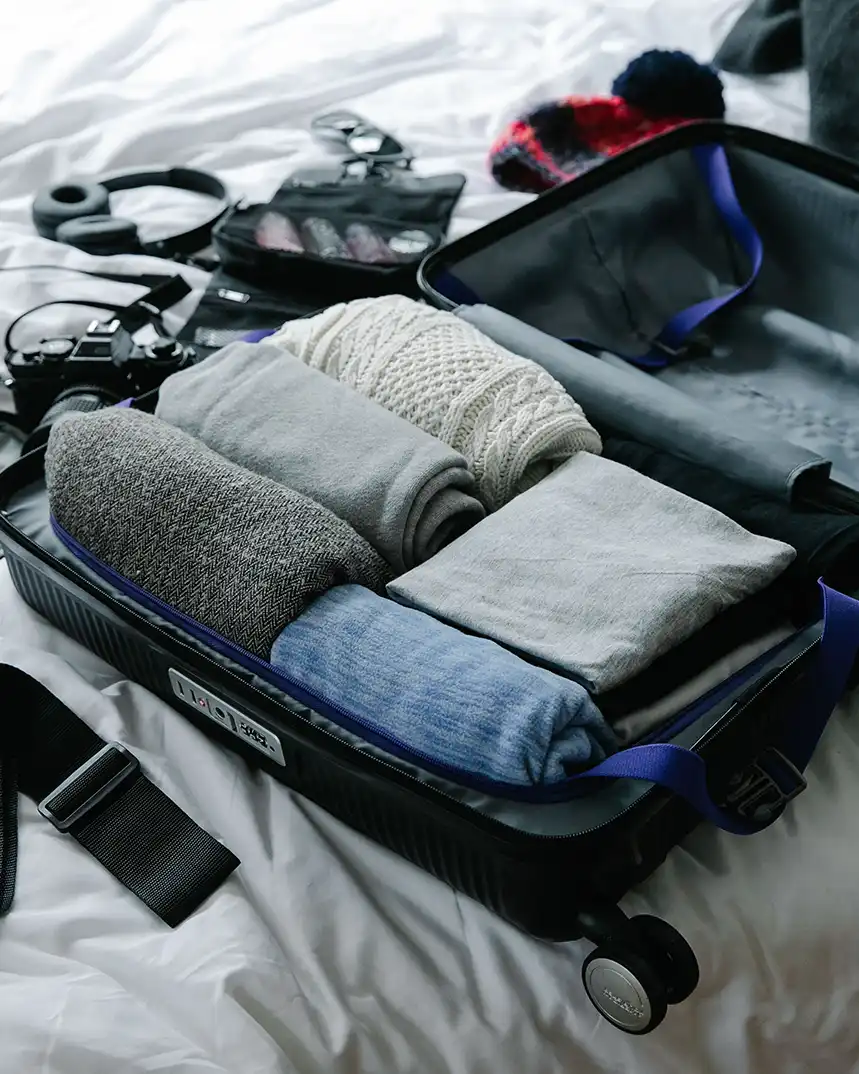
Pack for the trip you are taking, not every possibility
Three nights usually means an arrival day, two full days and the journey home. You need clothes for that rhythm, comfortable walking shoes and a small set of essentials. You rarely need four entirely different outfits, a second wardrobe for dinner and every toiletry from the bathroom shelf.
Hand luggage can make a short break easier: less to carry on public transport, fewer awkward hotel stairs and no checked bag to collect. It only works if the bag fits your actual booking and leaves you comfortable enough to enjoy the journey.
This is a suggested packing plan for ordinary sightseeing, cafés and casual meals. Adapt it for your health needs, personal care, religious visits, formal events and the forecast. Necessary equipment belongs in the plan from the start; it should not be squeezed in after the space has gone.
Start with the bag allowance you have paid for
“Hand luggage only” can mean a small under-seat bag, an overhead cabin bag or both. It is not a standard size shared by every airline. Open your booking and check the allowance for each flight before choosing the bag, including any different carrier on the return journey.
Rules checked: 8 October 2026. Ryanair currently includes a small personal bag measuring up to 40 × 30 × 20cm; its Priority & 2 Cabin Bags option adds a 10kg overhead bag up to 55 × 40 × 20cm. Check the official Ryanair bag policy against your fare.
easyJet currently includes one under-seat bag up to 45 × 36 × 20cm, including handles and wheels, with a 15kg limit; you must be able to lift and carry it yourself. A larger overhead bag requires the appropriate allowance. Confirm your booking with easyJet's official cabin-bag guidance.
Measure the bag when packed. Bulging pockets can turn a compliant soft bag into an oversized one, and a bag sold as “cabin size” is not a promise that it fits your airline. Avoid planning around someone else's previous experience of getting an oversized bag through the gate.
A realistic three-night packing list
Use what you wear on the journey as part of the wardrobe. Start with comfortable trousers or another practical bottom, one top, your main walking shoes and the outer layer the forecast calls for. The list below is a flexible example of additional items to pack, rather than a rule about anyone's clothing choices.
| Item | Suggested amount | Why it earns space | Adapt for your trip |
|---|---|---|---|
| Everyday tops | Two spare tops | Simple combinations for sightseeing and meals | Add one if the forecast or personal preference calls for it |
| Spare bottom | One lightweight option | A change if your travel outfit gets wet or dirty | Choose trousers, a skirt, shorts or a dress to suit you |
| Underwear and socks | Three changes, plus a small spare if needed | Fresh basics without washing on holiday | Include bras or other essentials as appropriate |
| Sleepwear | One compact set | Comfort without unnecessary bulk | Choose for the room and season |
| Extra layer | One thin jumper or cardigan if needed | Cool evenings and changing conditions | Wear bulkier layers on the journey |
| Toiletries and essentials | Only what you use over four days | Personal care, documents and practical needs | Keep medicines and necessary equipment a priority |
Choose pieces that work together, rather than arranging a separate outfit for every activity. A top you can wear for a museum morning and a casual dinner is more useful than something that only works with one other item. If a formal meal or concert needs different clothing, make room deliberately instead of adding it at the last minute.
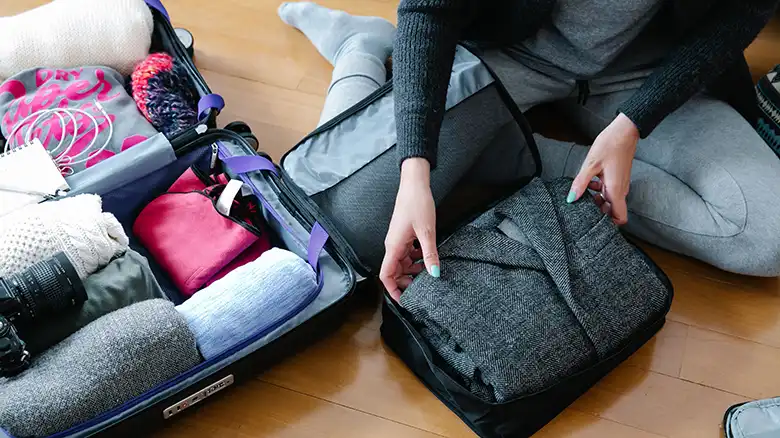
Walking shoes and weather matter more than outfit variety
Wear shoes you have already walked in comfortably. A city break is a poor occasion to discover that a new pair rubs after an hour. One versatile pair can cover most sightseeing and casual meals; take a second only if your plans or needs justify the space.
Check the forecast close to departure, including temperatures around the time you will actually be out. A sunny afternoon does not describe a cold arrival evening. In changeable weather, lighter layers and an appropriate waterproof usually give you more flexibility than one bulky extra outfit.
For winter breaks, the bag may work only if you wear the coat and heavier shoes on the journey. If that still leaves necessary items cramped, an additional allowance may be the sensible choice. Packing lightly is supposed to improve the trip, not make you cold or uncomfortable.
Churches and other religious sites may have clothing requirements. Check the places you intend to visit; a lightweight covering or suitable longer clothing can be more useful than another casual top. Our Rome guide helps you plan a visit that includes the Vatican and other important sights.
Liquids: check both departure airports
UK security rules depend on the airport. GOV.UK says most airports limit liquids to containers no larger than 100ml, while some allow containers up to two litres. A partly filled larger bottle still counts as a larger container where the 100ml rule applies. Check the official UK liquids guidance and your departure airport.
Check the return airport's official guidance separately. Do not assume a different scanner or a relaxed rule on the outward journey applies abroad. For an ordinary short break, taking small containers that meet the stricter of the two airports' rules can save you discarding toiletries on the way home.
Take only the products you actually use, in realistic quantities. Check which toiletries the accommodation supplies, but do not assume a particular product will suit you. Solid alternatives can reduce liquid volume if they are products you already like; there is no need to buy a complete new travel routine.
If you need medicines, medical equipment or special dietary liquids, use GOV.UK's separate guidance for essential medicines and medical equipment and check the airline or destination requirements relevant to you. Ordinary toiletry limits should not be used as a reason to leave essential treatment behind.
Give documents and useful items their own place
Keep your passport, booking details, payment cards and phone easy to reach without unpacking everything at security or the hotel. Save the accommodation address, arrival instructions and important confirmations for offline use. Carry any necessary insurance and emergency contact details in a form you can access if your phone is unavailable.
A charger, suitable plug adaptor and the cables your devices actually use are usually enough. Check the destination's socket requirements rather than assuming one adaptor covers all European countries. If carrying a power bank, check your airline's current battery rules and keep it accessible for inspection.
A compact day bag is useful only if it fits your baggage allowance. A small handbag or shopping bag is not automatically an extra free item. If your fare allows one piece, be able to put your day bag and its contents inside that piece before boarding.
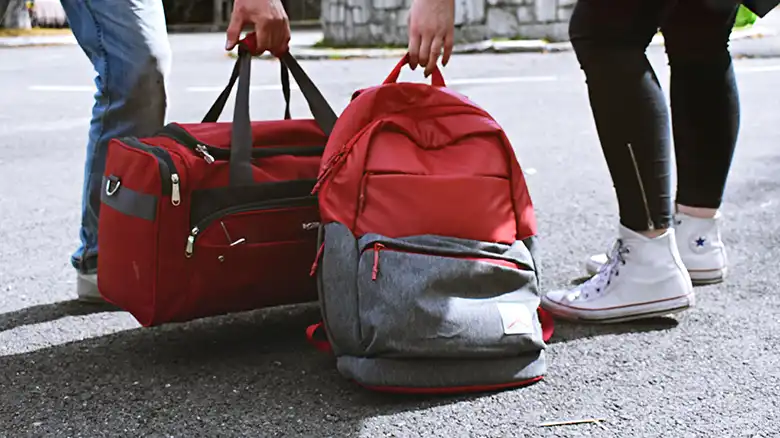
Pack so you can find things, not just fit them
Lay everything out before it goes into the bag. Remove duplicates, match the clothing and identify the items you are carrying only because there is space. Group toiletries, cables and small essentials so they do not disappear between clothes.
Packing cubes can keep a bag organised, but they do not create extra allowance or remove weight. Rolling some clothes may help them fit; folding others may suit the fabric better. Use the method that keeps the bag manageable rather than chasing one supposedly perfect technique.
Keep the items needed on the journey near the opening and protect anything that could leak. Close the bag without forcing the zip, weigh it where a limit applies and lift it as if you were putting it on a train rack or carrying it upstairs. Leave a little room for a small purchase, or decide in advance that souvenirs need to stay small.
When paying for more luggage makes sense
A basic under-seat allowance can work for some three-night trips, but it will not suit everyone. Winter clothing, larger shoe sizes, medical equipment, a formal event or a travelling companion's needs can change the calculation. Compare the full fare with the allowance you need, rather than treating the cheapest starting price as the final cost.
If you are travelling as a pair, share genuinely communal items such as a compatible charger or an adaptor where sensible. Keep each person's essential medication, documents and necessary equipment under their own control. Do not assume one person can take unlimited items because the other has spare bag space.
For rail journeys, light packing is still useful even though airline dimensions may not apply. You still need to handle your own bag and check the operator's luggage rules. Our European train city-break guide explains the extra planning for connected and overnight journeys.
The final check before you leave
- Confirm the baggage allowance for every flight.
- Measure the packed bag, including handles, wheels and pockets.
- Check both airports' liquids and security instructions.
- Match your clothing to the forecast and any planned visits.
- Keep documents, medicines and arrival details accessible.
- Check battery rules if carrying a power bank.
- Make sure any extra day bag fits inside your allowance.
- Leave space and weight for the journey home.
The aim is to arrive with what you need and a bag you can comfortably carry. Once you have covered those essentials, stop packing and concentrate on the part that matters: enjoying the city.
Finish planning your break
Use the hotel-area guide to make arrival easier, then build a three-night plan that leaves room to slow down.
Browse Travel Ideas & AdvicePhoto credits: Packing photograph on Pexels, Organised suitcase photograph on Pexels, Travel bags photograph on Pexels.