Bucharest at a glance
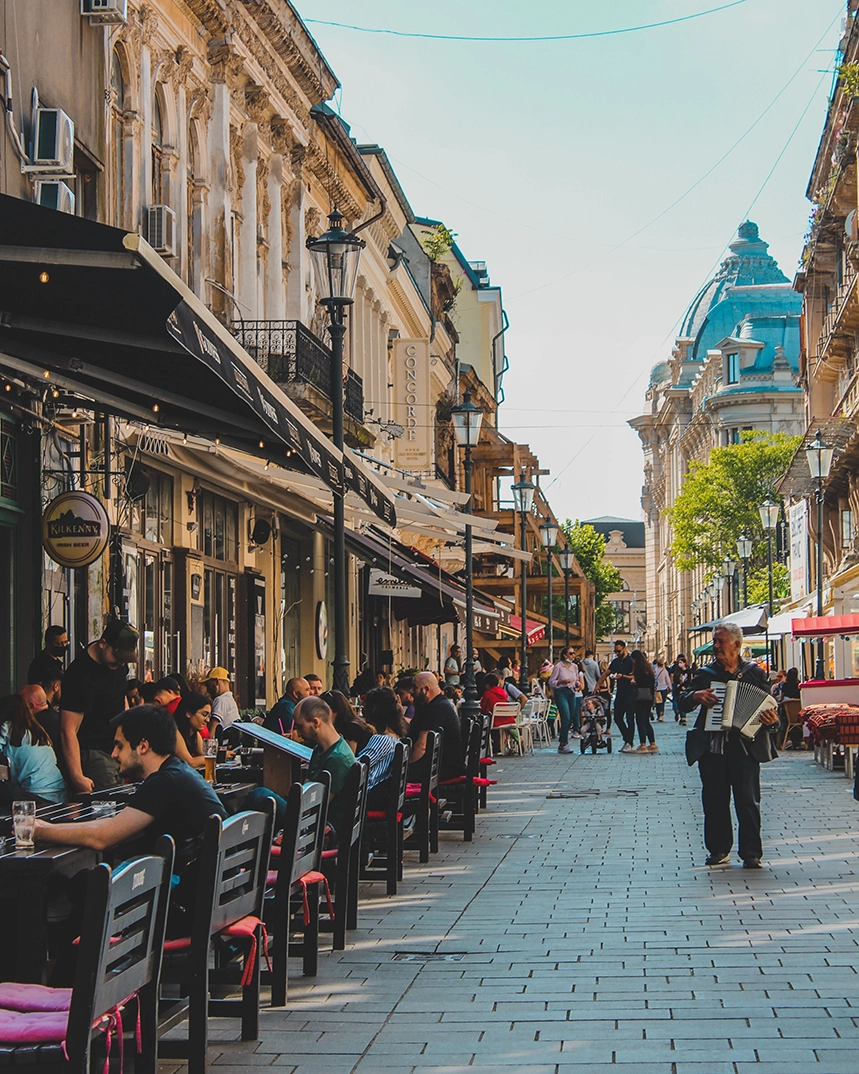
Bucharest is best for travellers who want a city break with history, food, architecture, good-value hotels and a slightly different feel from the more obvious European weekend choices. It is not as polished as Prague or Vienna, but that is part of its appeal.
A good first visit is usually 2 to 3 nights. Stay close to Old Town, Calea Victoriei, University Square or Piata Romana if you want an easy base for walking, restaurants and public transport. You do not need a car in the city itself.
Why Bucharest works well for a short break
Bucharest works well as a short break because it gives you a lot of contrast in a compact trip. You can walk through the Old Town, visit Revolution Square, see the Romanian Athenaeum, explore Calea Victoriei, eat well, and still leave time for a slower park walk or thermal spa visit.
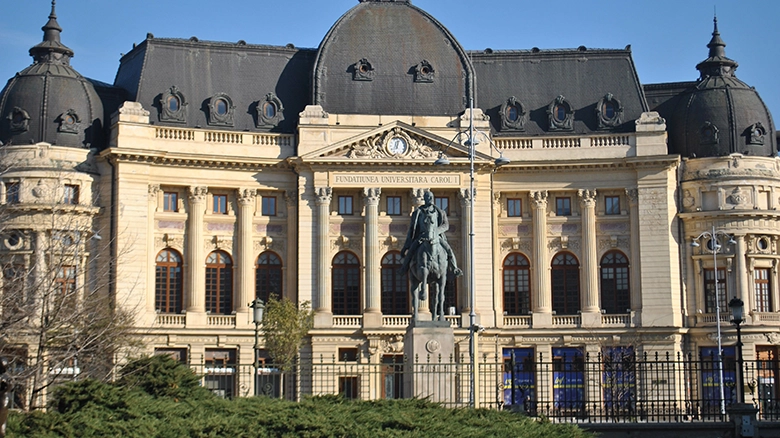
The city feels different from many better-known European capitals. You will find grand avenues, Belle Époque buildings, communist-era architecture, Orthodox churches, lively cafés, market halls and quieter residential streets sitting close together.
For a first visit, keep the plan simple. Use Old Town and Calea Victoriei as your main walking spine, add one major cultural sight, choose one market or food-focused stop, and leave space for Therme Bucharest or a calmer park afternoon if that suits your trip.
A relaxed 48-hour Bucharest itinerary
This itinerary works well for a Friday-to-Sunday break. It keeps the main sights, but avoids turning the weekend into a race across the city.
Day 1 morning: Old Town and Stavropoleos Monastery
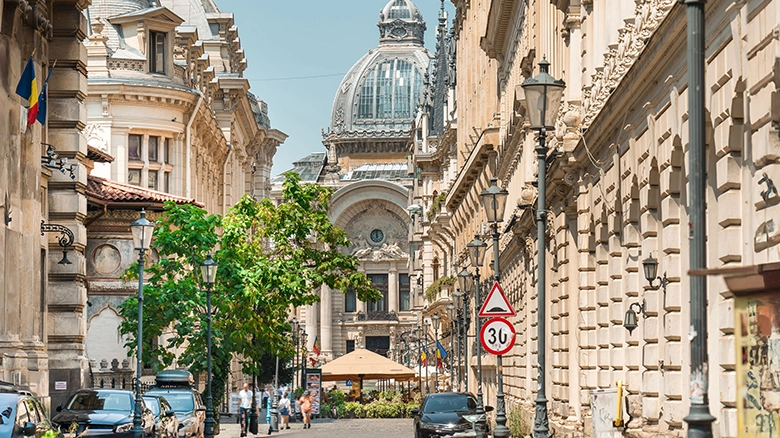
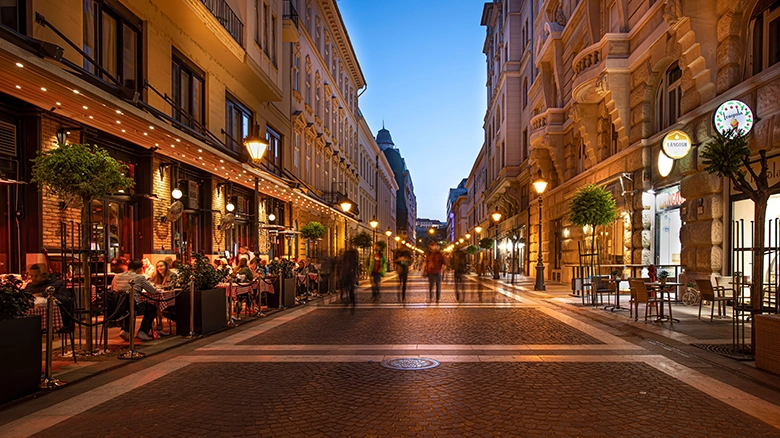
Start in the Old Town, also known as Lipscani. This is the easiest place to get your bearings and works well for a first morning. Walk the cobbled streets, look for historic façades, and stop at Stavropoleos Monastery, one of the most atmospheric small sights in the city centre.
Do not rush this part of the day. Bucharest is better when you slow down and notice the mix of old churches, passages, cafés, bars and grander buildings around the edges of the Old Town.
Day 1 afternoon: Calea Victoriei and Revolution Square
After lunch, walk towards Calea Victoriei. This is one of Bucharest’s most useful streets for a first visit, with architecture, shops, museums, cafés and historic squares along the route.
Spend time around Revolution Square, then continue towards the Romanian Athenaeum. Even if you do not go inside, the outside of the Athenaeum is one of the city’s most recognisable sights and gives the day a strong cultural stop.
Day 1 evening: Romanian food or a calmer wine bar
For your first evening, stay fairly central. Choose a Romanian restaurant, a relaxed wine bar, or somewhere close to your hotel so you do not have to travel far after a long day.
Traditional food ideas include sarmale, mici, ciorbă, grilled meats, polenta and papanași. Old Town has plenty of choice, but the busiest streets are not always the calmest option.
Day 2 morning: Palace of the Parliament or a museum
Use the second morning for one bigger sight. The Palace of the Parliament is the obvious choice if you want to understand the scale of Bucharest’s communist-era history, but it is best planned rather than treated as a casual walk-up visit.
If that does not appeal, choose a museum instead, such as the National Museum of Art of Romania or the Village Museum, depending on your interests and the weather.
Day 2 afternoon: park time, Obor Market or Therme Bucharest
After a heavier morning, choose a slower afternoon. Obor Market is a good choice if you want a more local food stop. King Michael I Park and the Village Museum work well if you want space and greenery.
Therme Bucharest is another option if you want a spa-style afternoon near the airport side of the city. It is better to plan this properly, especially if you are visiting at a busy time or need to work around a flight.
Day 2 evening: Old Town, a theatre area walk or an easy dinner
For your final evening, keep things flexible. You could return to Old Town, find a quieter restaurant near Calea Victoriei, or walk around the theatre and Athenaeum area before dinner.
Bucharest is not a city where every pleasure comes from ticking off sights. Some of the best moments come from cafés, side streets, evening lights and simply watching the city move around you.
Where to stay in Bucharest
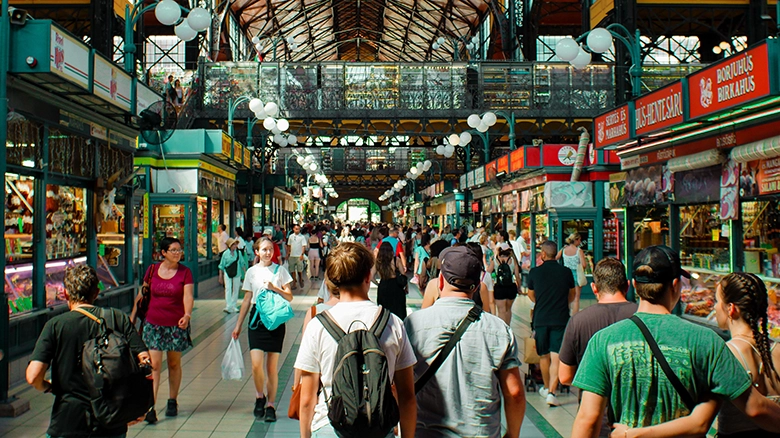
Where you stay matters on a short Bucharest break. The city is spread out, so it is worth choosing the area before choosing the hotel. For a first visit, stay close to Old Town, Calea Victoriei, University Square or Piata Romana if you want an easy base.
The areas below offer different balances of atmosphere, transport and evening convenience. Compare the location as carefully as the hotel itself, particularly if you expect to walk back after dinner or use an early airport connection.
Airport transfer advice
Bucharest Henri Coandă Airport is north of the city, and you have several useful ways into the centre. The simplest choice depends on where your hotel is, how much luggage you have and what time you land.
The airport train is useful if your hotel is near Gara de Nord or you are comfortable changing onward by metro, taxi or ride-hailing app. The airport bus is useful for parts of the centre, while taxis and ride-hailing apps can be easier after an evening flight or with luggage.
Food and drink ideas for a relaxed Bucharest break
Food is one of the easier pleasures of a Bucharest city break. You can keep it simple with one traditional Romanian meal, one market stop, one café break and one calmer evening meal away from the busiest Old Town streets.
Good things to try include sarmale, mici, ciorbă, grilled meats, polenta, Romanian wine and papanași. If you enjoy markets, Obor Market can give the trip a more local feel than simply eating every meal in the tourist centre.
Things worth booking before you go
You do not need to book every part of a Bucharest city break, but a few things are worth sorting early. Book your hotel once you know which area suits your trip, especially if you want to stay in the most central areas.
Mistakes to avoid in Bucharest
Bucharest is rewarding, but it helps to plan with realistic expectations. These simple mistakes can make a short trip feel harder than it needs to be.
A simple 3-day Bucharest plan
If you have three nights, use the 48-hour plan above and add one slower day. Good options include Therme Bucharest, the Village Museum, King Michael I Park, Obor Market, Cotroceni, a food tour, or a properly organised day trip outside the city.
The third day should not feel like a race. Use it to see a different side of Bucharest or to add one bigger experience that would make a two-day visit feel too rushed.
Who Bucharest is best for
Bucharest works well if you enjoy history, architecture, food, cafés, parks, markets, museums and city breaks that feel a little less predictable. It is also a good choice if you want better hotel value than some western European capitals.
It may not be the best choice if you want a perfectly polished old city centre or a trip where every attraction is close together. Bucharest has rough edges, traffic and contrasts, but that is also what makes it interesting.
Final thoughts
Bucharest is a strong choice for a relaxed city break if you want history, food, value and a different side of Europe. It rewards travellers who do a little planning but do not try to over-control every hour.
Choose the right hotel area, keep your first 48 hours simple, book the bigger experiences in advance, and leave time for cafés, parks, markets and wandering. That is where Bucharest works best.
Use this as your Bucharest starting point
Start with the 48-hour plan, choose the right hotel area, then add one bigger experience such as Therme Bucharest, the Palace of the Parliament or a food-focused tour.
Compare where to stay